How a power issue can affect your water supply
When you turn on your tap, you expect water to be there. But behind the scenes, there’s a complex system working around the clock to collect, treat, store and move drinking water across our network.
Electricity plays an important role at almost every stage of this journey. So, when there’s a power issue at one of our sites, even if it only lasts a few hours, the impact on water supplies can sometimes last much longer.
Here’s why.
From source to tap
Before water reaches your home, it goes through several stages.
Treatment
Water is collected from sources such as rivers, reservoirs and underground aquifers before being treated to make sure it’s clean and safe to drink. Our treatment works rely on electricity to operate the equipment needed throughout this process.
Pumping
Once treated, water needs to be moved around our network. Pumping stations help move millions of litres of drinking water through our pipes every day, including to areas on higher ground. Without power, some pumps cannot operate as normal, which can reduce the amount of water moving through the network.
Storage
Treated drinking water is held in storage tanks and reservoirs across our network before it continues its journey to customers. These provide an important buffer. If there’s a short interruption at a treatment works or pumping station, stored water can help us continue supplying customers.
But customers continue using water while an issue is being resolved. If water is leaving storage faster than we’re able to replenish it, levels begin to fall.
Pressure
Water needs enough pressure to travel through our network and reach homes and businesses. As storage levels reduce, pressure in parts of the network can also fall. Customers on higher ground or at the end of the network may notice lower pressure first and, if levels continue to fall, some customers may temporarily lose their supply.
Why can a four or five-hour power issue have a much longer impact?
Restoring power is an important part of resolving an issue, but it doesn’t mean the whole water network can immediately return to normal. During a four or five-hour power interruption, thousands of customers may continue using water while our ability to treat, pump or move water is reduced.
Once power returns, we need to restart equipment safely, increase the amount of water being treated and pumped, and begin replenishing storage across the affected area. At the same time, customers are continuing to use water.
It can therefore take time for storage levels to recover sufficiently and for pressure to build back up across the network. Depending on where you live, your supply may return at a different time to customers elsewhere in the same area. This is why the impact of a power issue can sometimes continue beyond the length of the original interruption.
What are we doing when this happens?
Our teams work around the clock during supply interruptions to restore supplies as quickly and safely as possible.
Depending on the incident, this can include moving water around our network, using tankers to add water directly into storage tanks or the network, managing pressure and working with electricity providers to restore power to affected sites. We also prioritise support for customers on our Priority Services Register and other vulnerable customers who may need additional help during a supply interruption.
Building a more resilient network
We know how disruptive it is to be without water, and we’re continuing to invest in making our network more resilient. This includes improving our ability to move water around the network, increasing storage where needed and investing in our treatment works and other infrastructure.
Our water network is complex, but every part of it plays a role in keeping water flowing from source to tap. And when one part of that journey is disrupted, understanding how treatment, pumping, storage and pressure work together helps explain why restoring water supplies can sometimes take longer than resolving the initial issue.

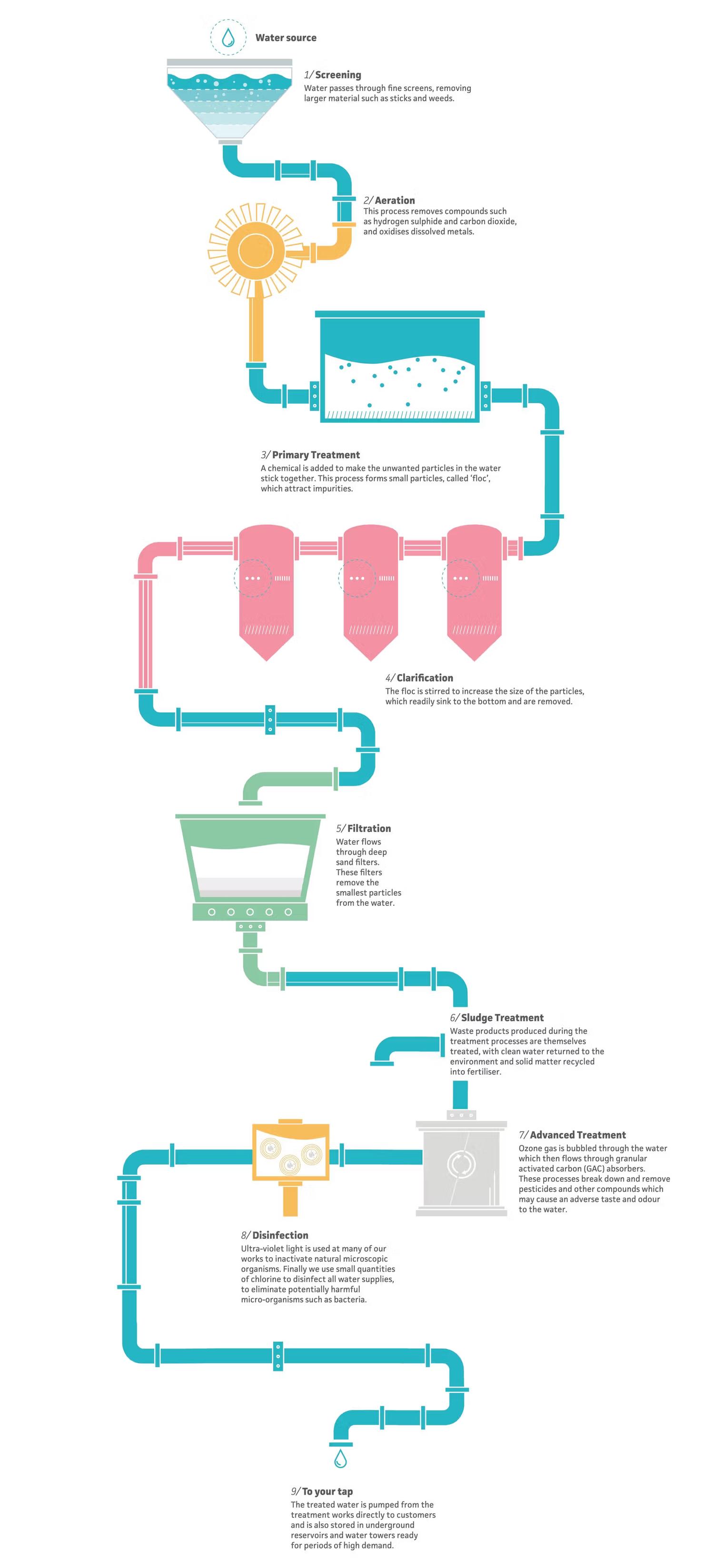
You can read more about our water treatment process here.(opens in a new tab)
Share this Article: