East Sussex farmer uses remote monitoring to transform water use and identify leaks
An East Sussex farmer has been using a new digital technology to remotely monitor water use across his farm and identify leaks in real-time through a phone app.
Duncan Ellis of Church Farm, a 200 hectare arable and livestock farming operation in Lullington, East Sussex, has worked with us and farming and environmental consultancy, ADAS, to trial a new remote water metering system which could remotely monitor their water use, both to their main farm buildings and to livestock troughs for 800 breeding ewes and 40 suckler cows grazing across the South Downs.
The need to manage water usage
Managing water consumption across such a wide area has always proved a challenge for the Church Farm team. Duncan explained:
“Leaks in pipes and troughs could easily go undetected for a long time. Manual checks were the only way for us to identify problems or pre-empt our bills, but given the remote location and spread of our animals, these checks demanded a significant amount of staff time.”
When we approached Duncan to trial a new remote water metering system that could provide real-time data on water supply in multiple locations, removing the need for manual readings, he readily agreed.
Duncan added: “We have long been committed to minimising the impact of our operations and have adopted a circular economy approach to how we farm.
“We’ve done what we can to reuse water through rainwater harvesting, for example, but what we still lacked was a cost-effective solution to monitor water use across the whole business, including our on-farm brewery.
“Without a way to measure our use accurately, we were struggling to manage it efficiently.”
Why does this matter?
Steve Howe, our Operational Catchment Lead, said: “Climatic changes and an expanding human population are increasing the importance of conserving water resources.
“Agricultural businesses have been identified as a key group where water use can be high, and monitoring is challenging due to remote locations with no mains power or phone signal.
“We feel it's important to try and address this and thanks to Duncan we were able to trial how remote monitoring of water use using specialised meters could be implemented on a farm setting.”
From installation to insight
With the support of ADAS, Duncan installed seven new water monitoring meters - six of which are powered by solar PV panels - across the farm. Each water meter transmits water flow data over a 2G connection to an app Duncan can access from home, allowing him to monitor and review water consumption remotely.

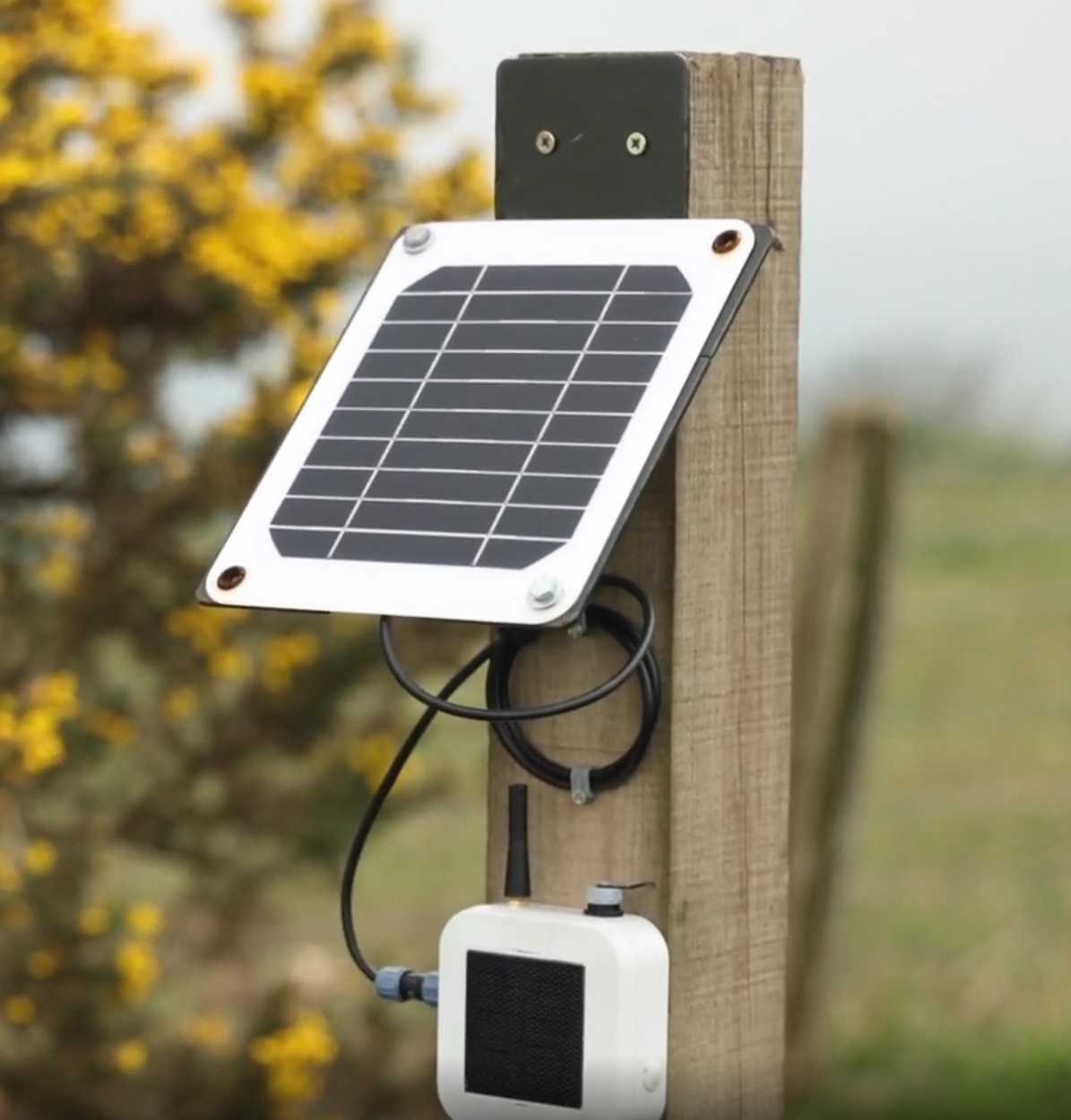
Tom Brassington, ADAS Principal Agriculture Consultant who independently assessed the technology for us, commented:
“There were some minor teething issues at the start. One of the solar-powered meters was installed in a low, shaded position on a roadside verge and didn’t have sufficient power to send a signal, so we replaced it with a higher-output PV cell.
“We also installed protective casing around cables to protect from rodent damage and fenced off units to prevent animals from bumping into them.”
Soon after installation though, the technology quickly highlighted a problem that had long gone undetected.
Tom explained:, “We noticed that one meter next to a rental cottage on the farm was recording a high level of water consumption, even overnight. An investigation revealed a valve leak in the garden, which the farm repaired.
“On two other occasions, the technology allowed us to identify a burst pipe very soon after it happened, so the water loss was minimal.”
Next steps
Given the results of this initial trial, we believe this digital metering technology could revolutionise how farmers manage their water use.
We are thinking of establishing a cluster group of interested farmers who could further expand the project.
Any interested farmers in the region are welcome to get in contact via email - catchment@southeastwater.co.uk
Watch our video on the remote metering technology installed at Church Farm.
Share this Article: