

The challenge has now finished
Thank you to all of Binsted for your efforts. Despite a record-breaking hot and dry summer, the Binsted community delivered outstanding results in the Water-Saving Challenge.
You achieved a victorious 7.98 per cent water reduction, successfully unlocking the full £5,000 reward to fund new outdoor storage lockers, plants and gardening tools for Binsted Primary School.
Thank you for your hard work protecting our local water sources and making a real impact. You are all water-saving champions!
We would love to hear your thoughts on the challenge, so please share your anonymous feedback below:
What is the challenge?
We’re challenging Binsted village to reduce your water use this summer. If you succeed, we will fund an exciting project for a local primary school, Binsted School.
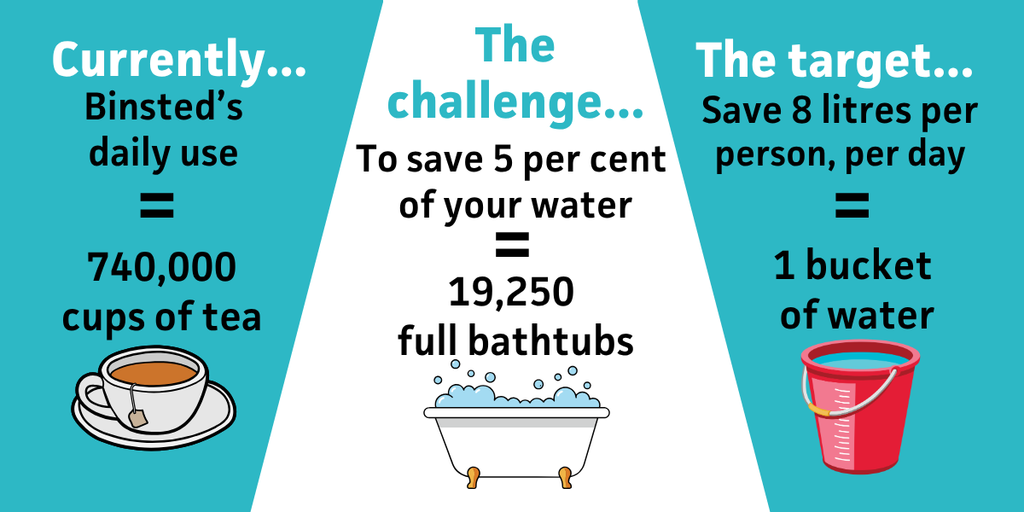
Currently, the Binsted community uses 168,000 litres (168 cubic metres) of water per day. That’s almost three-quarters of a million cups of tea!
With just a few small changes, we estimate you can reduce your water use by five per cent from 1 April to 30 September.
It means saving a total of 1,540 cubic metres of water over the six months, which is the same as 19,250 full bathtubs!
While that may sound a lot, hitting the target is really easy. Broken down, it means each person needs to save just eight litres a day - that's less than a bucket of water!
We’ll be sharing lots of simple water-saving changes to help you along the way. If the whole community makes these small, everyday changes, it will add up to a huge award for the school.

The benefit to your community
We have partnered with Binsted School to turn your water-savings into a community award.
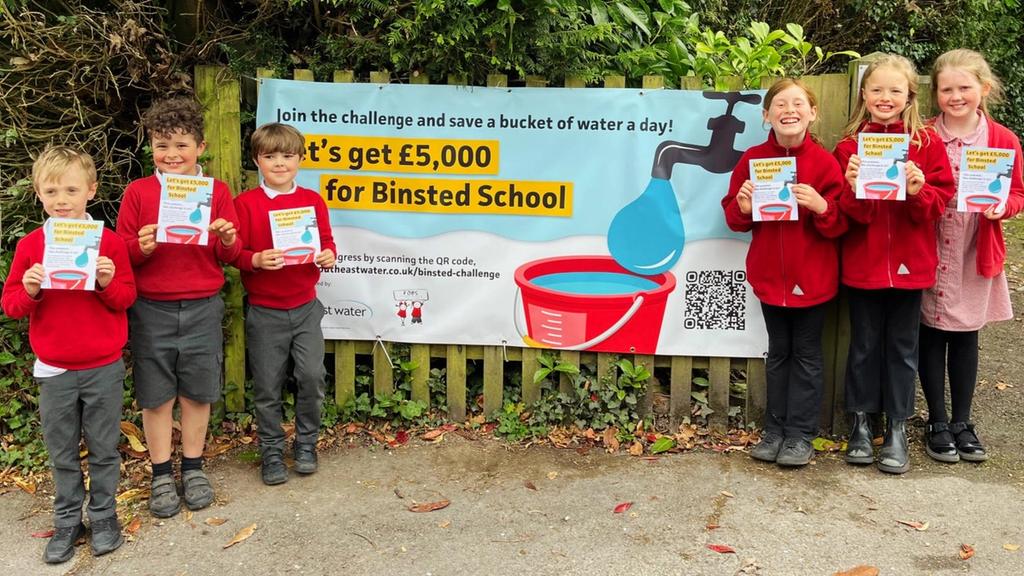
If the Binsted community can collectively reduce water use by five per cent between 1 April and 30 September, we will award £5,000 to the school to fund new outdoor wooden lockers, gardening tools and plants.
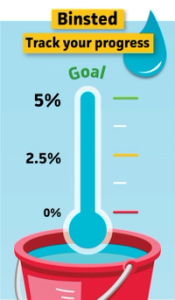
If you reach a 2.5 per cent reduction by 30 June, we’ll immediately release £2,500.
It isn’t just the school that benefits. By reducing daily use, you leave more water in the Lower Greensands aquifer, the precious water source that supplies your taps in Binsted. By using just eight litres less per day, you will help ease the summer strain, protect your local environment and ensure we have a sustainable water resource for the future.
Plus, if you’re on a meter, using less water means lower bills for your household.
Better yet, everyone can save on energy. Heating water uses a huge amount of power(opens in a new tab), so simple changes like shorter showers or using the eco-setting on appliances can easily save you hundreds of pounds a year on your energy bills.

A space to grow
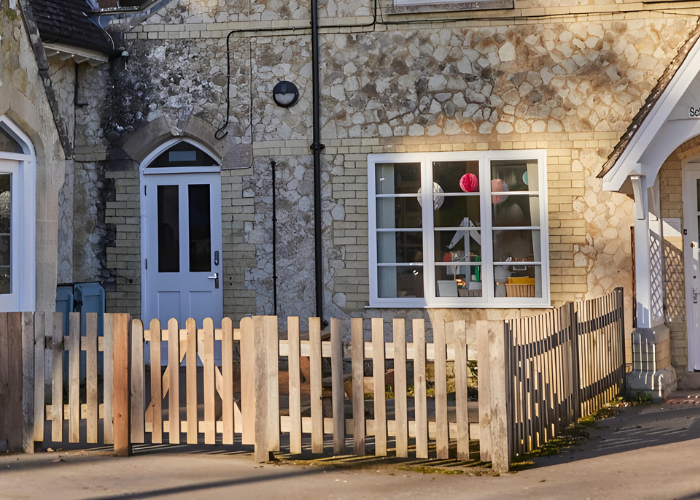
Binsted School will use this funding to transform an unused area of the school grounds into a dedicated outdoor learning zone which will improve student wellbeing and connect children with nature.
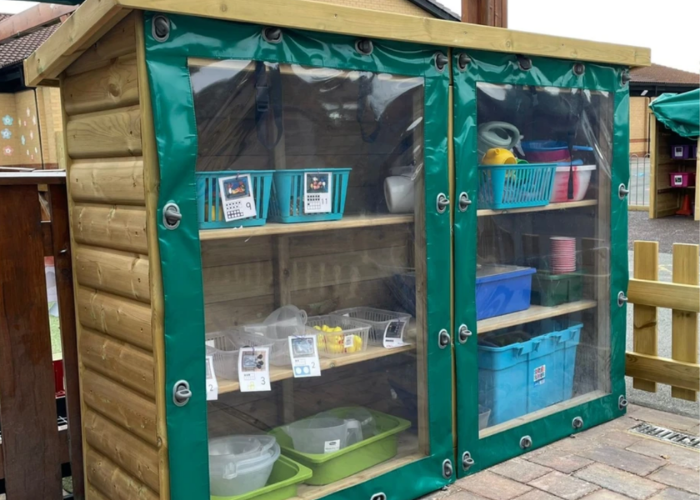
The award will fund outdoor wooden lockers for coats, wellies and lunchboxes, clearing clutter from the corridors and making outdoor learning easier.

The funding will buy:
- Two large outdoor clothing storage units.
- Two-tiered outdoor storage units.
- Plants and tools for the school’s volunteer-run Gardening Club.
It is an investment which will benefit Binsted pupils for years to come - and they need your help to make it happen!
How you can support
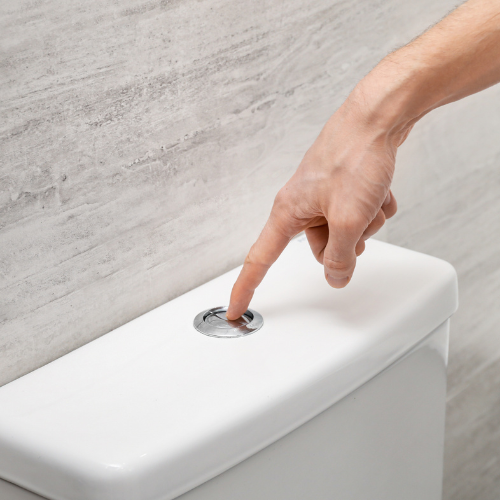
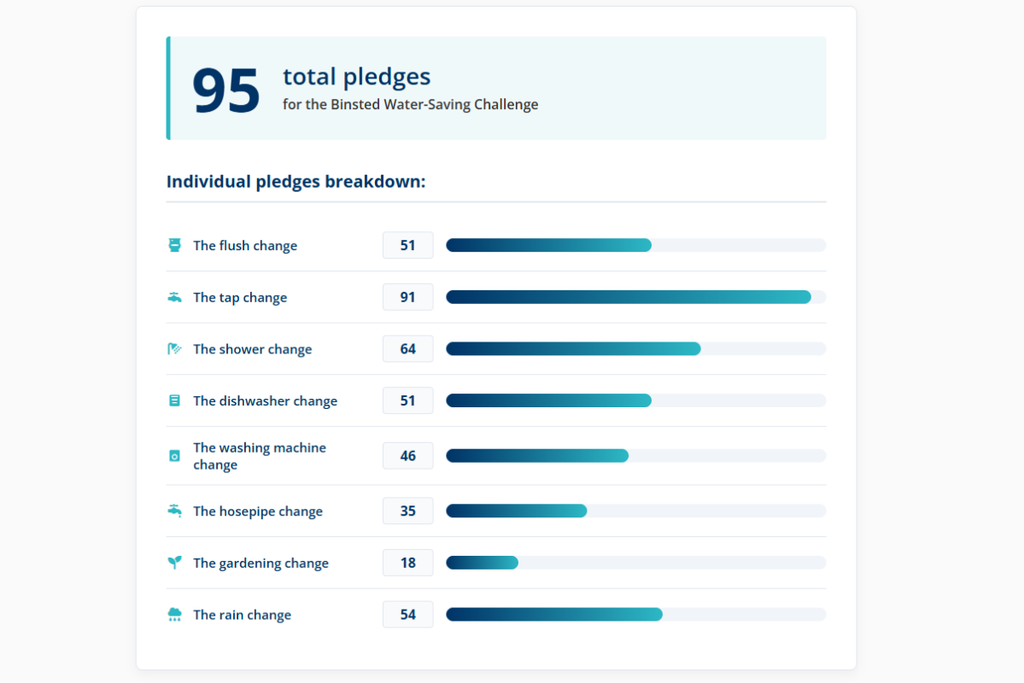
The flush change
Using the short flush of a dual-flush toilet uses about two litres less than a full flush. This is usually the smaller button, though it can vary by manufacturer.
Or, if you have an older toilet, save one to two litres on every flush by fitting a cistern bag. Order one for free here(opens in a new tab).
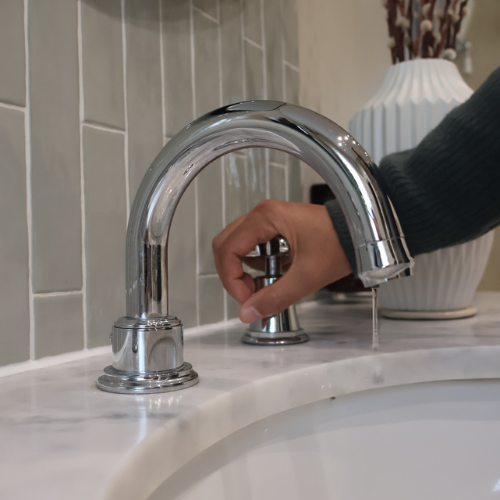
The tap change
A running tap uses six litres a minute. By turning it off while you brush your teeth for two minutes, you’ll smash your eight litre daily target before you even leave the bathroom!
You can easily boost those savings by keeping it turned off while shaving, washing your face and doing the dishes too.

The shower change
A power shower uses 15 litres a minute. Spending just one minute less in the shower hits your daily target instantly!
Instead of letting the water run, wet your hair and body, turn off the shower while you lather up, then turn it back on for a quick rinse.
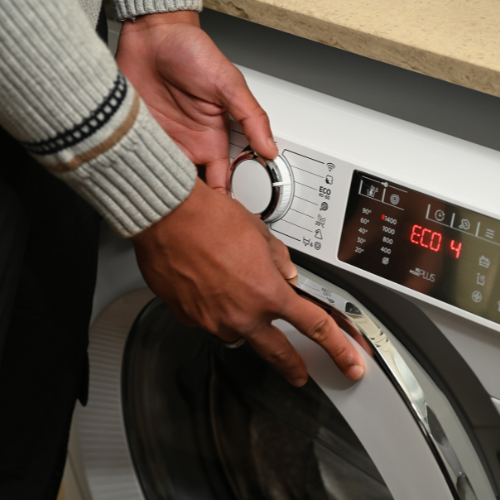
The appliances change
The dishwasher change: A dishwasher on an eco-mode uses 10 litres. By waiting until it’s full to run it, you save a whole cycle’s worth of water.
The washing machine change: A washing machine uses around 35 litres per eco-cycle. Waiting until you have a full load will save three buckets of water.
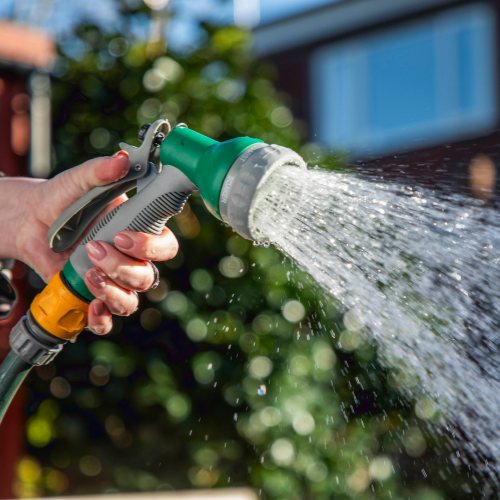
The hosepipe change
A hosepipe uses 1,000 litres an hour. Save 210 litres every 15 minutes by using a watering can instead in your garden. That’s the same as 105 bottles of fizzy pop and enough water to cover your entire street’s target for the day!
The gardening change
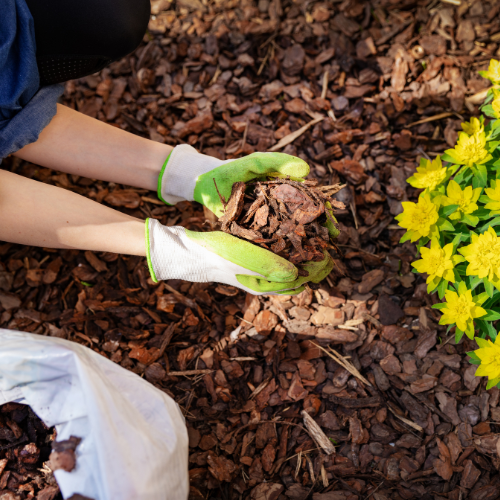
Add mulch, such as bark chippings, to flowerbeds to lock moisture in, so you don’t need to water as often.
The rain change: Install a water butt in your garden to capture any rain. It provides free water that your plants love.
Want to save even more?
We have a dedicated webpage to saving water(opens in a new tab), and we also offer lots of free water-saving devices, such as four minute shower timers and water-efficient shower heads, as well as discounted water butts(opens in a new tab).
Want to save even more?
We have a dedicated webpage to saving water(opens in a new tab), and we also offer lots of free water-saving devices, such as four minute shower timers and water-efficient shower heads, as well as discounted water butts(opens in a new tab).
Show your support

Track your progress

Target smashed: 7.98 per cent reduction achieved!
A massive thank you to everyone in Binsted. Your community spirit has driven water savings even higher to a staggering 7.98 per cent water reduction.
Because of your huge water-saving efforts over the summer, you have absolutely smashed the five per cent target. Binsted Primary School has now unlocked the remaining £2,500, bringing their total reward to the full £5,000.
Well done on this incredible achievement!
What we're doing to save water
We’re working hard to play our part, too. Here are some of the ways we are helping to protect your water supply:
- Tackling leaks: We invest around £40 million a year to find and fix leaks(opens in a new tab) across our network. We have more than 90 dedicated technicians using innovative technology to spot leaks, such as satellite surveys and drones, and 70 teams working around the clock to repair them faster than ever before.
- Upgrading our network: We recently completed a mains replacement scheme in Filmorehill Lane, Alton(opens in a new tab), where we replaced 1.2km of burst-prone pipes. In addition to this, we’re investing £2.1 billion to modernise our infrastructure(opens in a new tab) and create a more resilient water supply network. From rolling out smart meters(opens in a new tab) and replacing old water mains, to improving our water treatment works and reservoirs(opens in a new tab), we are making sure that when you turn on your tap, you only get the best quality water.
- Working with our community: We work closely with local farmers and landowners(opens in a new tab) to harvest rainwater and to prevent soil, fertilisers and pesticides from washing into rivers and groundwater. We also offer free water-saving visits to local schools(opens in a new tab) to fit devices and fix leaks.
- Providing free water-saving resources: We want to make it as easy as possible for you to save water at home. We offer a range of free devices(opens in a new tab) from Leaky Loo strips to check for hidden toilet leaks to tap aerators which cut your water use in half. We also provide great discounts on water butts(opens in a new tab), and feature a dedicated webpage for water-saving advice(opens in a new tab). Don't just take our word for it, check out Water UK(opens in a new tab), the trade body for the UK water industry, and Waterwise(opens in a new tab), a not-for-profit organisation focused on water efficiency and conservation, for advice too.
Why are we doing this?
This is a new community initiative focused entirely on the power of coming together to save water. We want to inspire Binsted to see the massive impact we can have when everyone does their bit.
We’re on a mission to reduce water use. As of now, the average person in our region uses 143.4 litres of water each day. With the Environment Agency warning of a potential five billion litre shortage of water by 2055(opens in a new tab), the government has set targets to bring the daily average down to 110 litres per person by 2050.
We want to see if the Binsted community can reduce their daily water use by just eight litres, less than a bucket of water. It’s just one shorter shower, one less car wash, or using the short flush or small button when flushing. If you all adopt this mindset, the savings will be huge.
There is power in numbers, and by all playing your part together, you can secure this award for the school while protecting your local water supply.
Why is this important for Binsted?
Your water comes from deep underground, specifically from the Lower Greensands aquifer (underground layers of rock that hold water). These rocks act like a giant sponge, holding water that falls as rain and gradually filters down to the aquifer far below our feet.
To get this raw water to your tap, we use local boreholes to pump it up from deep underground. It is then taken to Greywell Water Treatment Works where it goes through a rigorous nine step process to make sure it is safe to drink, before finally being transferred to local storage tanks and then pumped through a network of pipes directly into your homes and businesses in Binsted.
In the summer, when demand spikes, it puts a huge strain on your local water supply. We can only take, treat and pump a certain amount of water and demand can outstrip supply. We also need to protect aquifers by not taking too much from them and damaging this special environment. This means reducing how much we take from them, so they can be a sustainable water resource for the future.
By using water wisely, we can make sure there is enough water for the local environment and for everyone, all summer long.
Download the challenge poster
Show your support and help spread the word by downloading the “Binsted Water-Saving Challenge” poster (printable A4 PDF).
FAQs
We’ve put together a list of common questions to help explain how the challenge works.
No, your water bill is not going up to pay for this specific initiative. This £5,000 community award comes from a dedicated budget for water efficiency.
Recent increases to water bills were necessary to help us fund essential upgrades across our entire network and to cover rising operational costs.
If you’re on a water meter, the opposite is true! If you join in and reduce your water use, you will likely see your own water bill go down.
It’s a win-win: you save money and the school gets funding!
No, we will be measuring the community’s collective efforts, not individual households or businesses.
While your individual water meter will continue to be read every six months as normal, we will not be using these readings in the challenge.
For this challenge, we are measuring the total volume of water flowing into the Binsted community from our main water network boundary.
We are starting to roll out upgraded meters across our network, which will eventually connect to smart technology to record water use more regularly. However, that is a separate rollout and is not linked to this challenge. You can find out more about our smart meter programme by clicking the button below.
We look at the big picture. We measure the total volume of water flowing into the Binsted community from the water network boundary. We’ll compare this against typical usage for the challenge period (April through to September) from the past five years to see the reduction.
We will update the results fortnightly so you can check the water-mometer to see how close Binsted is to securing the award.
Not to worry, these will not affect your progress. We want this challenge to be fair, so you will only be measured on the water you have the power to save.
We monitor the network 24/7. If there is a burst pipe, a supply interruption or a major leak, we automatically adjust the data so it doesn’t count against your community target.
We also factor in the weather and rainfall, ensuring the target remains achievable even if it’s a hot, dry summer.
We are already heavily investing in improving the network(opens in a new tab), with £2.1 billion dedicated to improving customer services, reducing customer supply interruptions and strengthening network resilience between 2025 and 2030.
Fixing pipes is only half the solution. To protect our water supply, we also need to reduce the amount of water we take from the environment and the strain high demand has on the network. We can do this by working together with the community to use less water and ease the pressure on our local infrastructure.
Pumping and treating more water during peak summer demand is costly due to the additional power, chemicals and infrastructure required. We have calculated how much these peak operations cost us, and the £5,000 award represents those savings. Instead of spending that money to push more water through the system, we are passing the savings directly back to the community.
We are currently testing this approach as a trial initiative in three areas. If we can prove that communities can work together to lower water demand, we hope to scale this challenge to help even more areas in the future.
No, the five per cent reduction target is an overall goal for the entire six month challenge (from 1 April to 30 September).
A five per cent reduction is a total of 1,540 cubic metres, which over six months works out to eight litres per person, per day.
Every litre of water you save over the summer is added to a running total. As long as the community’s usage by the end of September is five per cent lower than the historical average, your community is awarded the full £5,000.
While saving water is a great habit all year round, summer is when our local water supply is put under the most pressure. The potential for hotter, drier weather means demand can outstrip supply and water sources can drop to low levels.
By running this challenge from April to September, we are tackling this peak period by easing the strain on our supplies, making sure there is enough water for everyone all summer long and protecting water resources.
If temporary hosepipe restrictions are introduced, households must stop using hoses, sprinklers and pressure washers. Our team will adjust the data to account for this enforced drop.
Some businesses are legally exempt from restrictions, so they can keep operating and using hosepipes. Their continued water use, including hosepipes, is already accounted for in our baseline data, so it won’t count against your community’s progress. Businesses can find their own eight litre daily savings in staff kitchens, bathrooms or by simply being more mindful with their hose use.
Both households and businesses are part of the community effort, but ultimately you will only ever be measured on the water you have the power to save.
Yes, we all need water for hydration and hygiene. We are simply challenging you to be more mindful of your water use.
It’s about simple changes, like using a watering can instead of a hosepipe, or turning the tap off while shaving. These small changes add up to huge savings.
Not at all! We are measuring your total water use over the full six months, so one bad month won't ruin the progress.
It just means the community will have some catching up to do. You can easily bounce back by pulling together and saving a bit more water in the following weeks. As long as you hit the overall target at the end of the challenge, the award is yours!
Yes! You can still be awarded the £5,000 if your total six month usage meets the final five per cent target. Missing the halfway milestone just means your community will need to pull together and work a little harder in the last three months to catch up.
We still want to award you for your efforts. If Binsted reaches the halfway mark (2.5 per cent reduction), we will still award £2,500 to the school. But let‘s aim for the full £5,000 award!
No, this challenge is a whole community effort and includes homes, schools and local businesses.
Everyone’s water use counts towards the total, so we need all of Binsted to pull together to reach the target.
Binsted is one of just three communities across our supply area selected to take part in this innovative water-saving trial.
We have specifically chosen Binsted because of its distinct position on our water network boundary which makes it an ideal area to accurately measure the impact of collective action.
Being one of the first to trial this means Binsted is leading the way. If we can prove here that communities can work together to lower water demand, we hope to scale this challenge to help even more areas in the future.
We have selected community partners based on their proximity to the area. We are tracking the community's water savings within a very specific water network boundary, so we partnered with projects in the catchment.
Binsted School was selected because they are the closest suitable partner to our targeted monitoring boundary.
All customer emails about the Binsted Water-Saving Challenge are below:
25/03/26: Email 1(opens in a new tab)
01/04/26: Email 2(opens in a new tab)