
Water supply issues 17/01/2026: Tunbridge Wells.
Current status: supplies have been restored
Water has returned overnight to the 6,500 affected properties in the Tunbridge Wells area. Some customers may be experiencing low pressure as the water levels continue to build this morning throughout the area’s pipeline network.
Tankers are still being used to inject water into storage tanks across Kent to finalise balancing the network over the coming days.
Our leak repair teams are working around the clock to fix the leaks and bursts across Kent and Sussex, with extra resources available to help carry out repairs.
- Important clarification: This is a new issue caused by recent pipe bursts and is not related to the previous boil water notice. The water currently in the system remains safe to use as normal.
Cloudy or discoloured water
As our network refills, you may experience low pressure or intermittent supplies. You may also see some discoloration in your water.
Why is my water discoloured?
The discolouration is caused by naturally occurring iron and manganese deposits in our pipes. These deposits are harmless, but they can get stirred up when there's a change in water pressure. This can make the water look cloudy or brown.
What should I do?
If your water is discoloured, please run your cold kitchen tap until it runs clear. It can then be used for drinking, washing and cooking as normal.
Update: The boil water notice for Tunbridge Wells and surrounding areas has been lifted with immediate effect.
You no longer need to boil your tap water before use. It is now safe to drink and use as normal. We have changed our treatment processes to meet strict standards and flushed the network, so you can be sure the water is safe.
Compensation update:
We are currently receiving a high volume of calls in relation to the compensation that has been provided. We have now updated all of the accounts for customers who were impacted.
All customers who were impacted should now have received notification, either via email or in the post.
If you are calling to request a refund, to avoid delays, you can complete a contact us form either as a guest via our website at southeastwater.co.uk/help/contact/(opens in a new tab), or through your MyAccount Service.
What to do now your water supply is back to normal
Now the boil water notice is lifted:
- Dispose of stored water - Pour away any water you had stored, either onto your garden or into a drain.
- If you’ve been away or not used a tap or shower - Please turn them on and let it run for a few minutes. This is because you may have water remaining in the pipes from when the boil notice was in place, which will need to be flushed through first. You do not need to do this if you have been regularly using your taps and showers.
- If you notice discoloured water - Let your tap water run for a few minutes. Due to the disruption to pipes water may appear discoloured. This is normal and happens when naturally-occurring deposits, which settle and build up within our network of mains over time, are disturbed.
- Tell your neighbours - Please also check with your neighbours to make sure they are aware the tap water is now safe to drink and no longer needs to be boiled.
Will you compensate me for this?
Yes, we will be writing to all customers affected about the compensation we will be applying to your accounts.You will receive compensation for both the water supply interruption and the boil water notice.
We recognise the disruption this incident has caused and are committed to compensating you fairly. This is why even if you had intermittent water supply, we will compensate you for the full duration of the outage.
Household customers: You will receive compensation automatically as a credit to your account. You do not need to contact us to receive this.
Business customers: We will provide compensation to your water retailer. It is the retailer's responsibility to apply this to your account.
We abide by our Guaranteed Standards of Service (GSS),find out more here.
Key details:
- No caps: While regulations usually limit compensation to two years’ worth of water charges, we are waiving this cap. You will receive the full amounts regardless of your usual bill amount.
- Timeline for businesses: To help with cash flow, we are fast-tracking payments to water retailers on Monday. We have asked retailers to credit these to your account immediately.
Additional business support: On top of the GSS guided payments, we are establishing a separate fund for businesses that faced specific financial losses. This will be managed independently, and we will share details on how to apply shortly. This takes the total package of compensation to businesses up to £2.5 million.
How can you be confident that the water is safe to drink?
Extensive testing shows that since adjusting our treatment process on 4 December, water from the Pembury Treatment Works has consistently met all strict regulatory standards. We have sampled the network from source to tap to ensure it is safe.
We are accredited to undertake water sampling and testing at our laboratory in Farnborough, Hampshire, where we carry out more than one million water quality tests each year.
We are independently overseen by the United Kingdom Accreditation Service (UKAS). UKAS is the sole national accreditation body for the UK, recognised by the Government.
We are also monitored closely by the independent regulator, the Drinking Water Inspectorate (DWI). Our water must adhere to the strict DWI regulations and standards.
What happened?
The problem was caused by repeated water quality challenges at our water treatment works in Pembury on Saturday 29 and Sunday 30 November. The water that was produced was too cloudy (turbid - see more on the FAQ below) for the final disinfection process to have worked with absolute certainty, so the treated water did not meet the strict regulatory standards for consumption.
As a result, our systems automatically shut down the treatment process, preventing non-compliant water from entering the public water supply. Initially, we expected the problem to be resolved quickly, but it proved more complex to fix. This meant the level of compliant, treated water in the network fell critically low across parts of Tunbridge Wells and surrounding areas, causing loss of supply or low pressure.
We moved water around the network and used tankers to keep as many customers in supply as possible, but it was not possible to restore supplies to every household and business.
Due to the extended period customers had been without supply for, we understood the difficulties this was causing homes and business. To help get essential tasks like flushing toilets back for customers, we made the decision on Wednesday, 3 December to restart the Pembury Water Treatment Works, with the instruction to boil it before drinking, preparing food, or washing dishes.
While the boil water notice has been in place, the water has been chemically safe. Our comprehensive water sampling to date has shown no bacteria has been detected in your area. The boil water notice has been in place as a precaution.
Why did this happen?
Raw (untreated) water entering our Pembury works is taken from springs and wells in the surrounding area. This water is then stored in a reservoir before being treated.
The water treatment process at Pembury has been consistently stable for a long time. However, for reasons we are continuing to investigate, the make-up of the raw water changed suddenly. This is very unusual . It meant we had to alter the treatment method, test a variety of solutions and consult with industry and supply chain experts to come up with the best resolution.
By Thursday 4 December the treatment process was adjusted successfully. This ensured that water produced in the process consistently met all regulatory standards.
Why did the instruction to boil tap water stay on so long?
Although the water produced at Pembury Water Treatment Works consistently met strict regulatory standards from Thursday 4 December, the precautionary boil water notice remained in place to make sure all the water produced during that time had flushed through the entire water network.
Our teams have been carrying out water quality samples across the Tunbridge Wells network from source to tap to ensure this water meets strict regulatory standards, as set out by the Drinking Water Inspectorate (DWI).
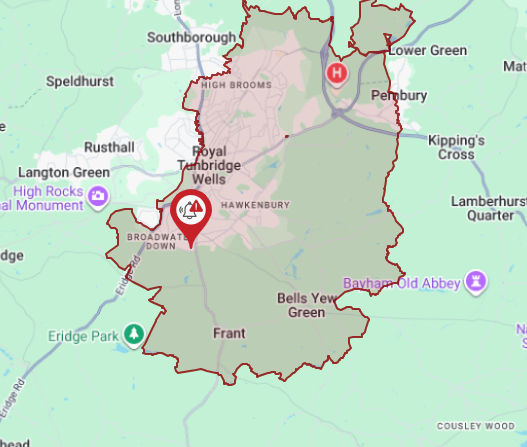
What was the area affected?

What have we been doing?
To support our most vulnerable customers, our teams made more than 28,000 deliveries of bottled water to around 3,000 customers on our Priority Services Register (PSR). We also responded to individual requests for deliveries from vulnerable customers not already on the register. We also set up bottled water stations for customers to collect.
Our teams delivered supplies to care homes and our tankers injected water into the network supporting Tunbridge Wells Hospital and the Nuffield Hospital. We also delivered 82,656 litres of water to community hubs, Age Concern and the Salvation Army. Our Alternative Water team also worked closely with the NHS Kidney Treatment Centre and Abbey Court Dialysis Centre.
In total, we have tankered more than 37 million litres of water into the network since Friday 28 November and handed out more than 1.9 million litres of bottled water to customers through our bottled water stations and deliveries to those on our Priority Services Register (PSR). At the height of the incident, we had 36 tankers deployed to support the network.
What happens now?
Now the boil water notice has been lifted and it is safe to drink your tap water again, we hope the return of a normal water supply allows you to return to your normal routine.
We have updated the water treatment process so it meets strict regulatory standards. We are already planning further improvements by installing more filters to improve the resilience of the site.
We will undertake a full independent review of what happened and how we responded. We will put an action plan in place to make improvements for the future.
We know we have to learn from this incident including providing clearer, transparent communications, better clarity around the postcodes affected by the boil water notice and more detail in our Frequently Asked Questions. All the comments, suggestions and views that we have received have been collated and will be used to help shape the service we provide going forwards.
Once again, we are incredibly sorry for the disruption to your water supply and the impact this has had on you, your family, businesses and the Tunbridge Wells community.
FAQs
We know you may have some questions. Here are some FAQs to answer any queries you may have.
General questions
The problem was caused by repeated water quality challenges at our water treatment works in Pembury.
The water that was produced was too cloudy (turbid) for the final disinfection process to have worked with absolute certainty, so the treated water did not meet the strict regulatory standards for consumption.
We have updated the water treatment process so it now meets the strict regulatory standards and your water is safe to drink again.
Raw (untreated) water treated at our Pembury Water Treatment Works is taken from springs and wells in the surrounding area. This water is then stored in a reservoir before being treated.
The water treatment process at Pembury has been consistently stable for a long period of time. However, for reasons we are continuing to investigate, the make-up of the raw water changed suddenly. It is very unusual for this to happen. It meant the way in which the raw water was treated had to change and we tested a variety of solutions and consulted with industry and supply chain experts to come up with the best resolution.
By Thursday 4 December the treatment process was adjusted successfully. This ensured that water produced in the process consistently met all regulatory standards.
Although the water produced at Pembury Water Treatment Works consistently met strict regulatory standards from Thursday 4 December, the precautionary boil water notice remained in place to make sure all the water produced during that time had flushed through the entire water network.
Our teams have been carrying out water quality samples across the Tunbridge Wells network from source to tap to ensure this water meets strict regulatory standards, as set out by the Drinking Water Inspectorate (DWI).
With immediate effect, you can start using your tap water normally again.
Extensive testing shows that since adjusting our treatment process on Thursday, 4 December, water from the Pembury Treatment Works has consistently met all strict regulatory standards. We have sampled the network from source to tap to ensure it is safe.
We are accredited to undertake water sampling and testing at our laboratory in Farnborough, Hampshire, where we carry out more than one million water quality tests each year.
We are independently overseen by the United Kingdom Accreditation Service (UKAS). UKAS is the sole national accreditation body for the UK, recognised by the Government.
We are also monitored closely by the independent regulator, the Drinking Water Inspectorate (DWI). Our water must adhere to the strict DWI regulations and standards.
Now the boil water notice is lifted:
- Dispose of stored water - Pour away any water you had stored, either onto your garden or into a drain.
- If you’ve been away or not used a tap or shower - Please turn them on and let it run for a few minutes. This is because you may have water remaining in the pipes from when the boil water notice was in place, which will need to be flushed through first. You do not need to do this if you have been regularly using your taps and showers.
- If you notice discoloured water - Let your tap water run for a few minutes. Due to the disruption to pipes, water may appear discoloured. This is normal and happens when naturally-occurring deposits, which settle and build up within our network of mains over time, are disturbed.
- Tell your neighbours - Please also check with your neighbours to make sure they are aware the tap water is now safe to drink and no longer needs to be boiled.
Your water supply has consistently met all regulatory standards and has been safe to use since 4 December. Therefore, it is unlikely you need to dispose of the water in your tank.
However, if you have been away or have not used your water since that date, you may wish to refresh the water in the tank for peace of mind. You can do this by turning your cold bathroom tap on for around 20 minutes. This will flush the tank and replace the stored water with fresh mains water.
Yes, we will be writing to all customers affected about the compensation we will be applying to your accounts. You will receive compensation for both the water supply interruption and the boil water notice.
We recognise the disruption this incident has caused and are committed to compensating you fairly. This is why even if you had intermittent water supply, we will compensate you for the full duration of the outage.
Household customers: You will receive compensation automatically as a credit to your account. You do not need to contact us to receive this.
Business customers: We will provide compensation to your water retailer. It is the retailer's responsibility to apply this to your account.
We abide by our Guaranteed Standards of Service (GSS),find out more here.
Key details:
- No caps: While regulations usually limit compensation to two years’ worth of water charges, we are waiving this cap. You will receive the full amounts regardless of your usual bill amount.
- Timeline for businesses: To help with cash flow, we are fast-tracking payments to water retailers on Monday 15 December. We have asked retailers to credit these to your account immediately.
Additional business support: On top of the GSS guided payments, we are establishing a separate fund for businesses that faced specific financial losses. This will be managed independently, and we will share details on how to apply shortly. This takes the total package of compensation to businesses up to £2.5 million.
Water is turbid when natural elements such as sediment, as well as other particulates (fine particles) make the water cloudy. This is completely normal because raw (untreated) water sometimes comes from underground.
Water treatment processes remove the cloudiness from the water to make it safe for consumption.
At our Pembury works, the raw (untreated) water comes from springs and wells and is then stored in an on-site reservoir, before we treat it.
The repeated water quality challenges we had at our Pembury works was that the water was still too cloudy after treatment, which was unusual. We have updated the water treatment process so it now meets the strict regulatory standards and your water is safe to drink again.
While home test kits can be a useful guide, they are often inaccurate and may be easily contaminated by the user.
Our laboratory is regulated by the Drinking Water Inspectorate (DWI) which is an independent organisation responsible for ensuring that public water supplies in England and Wales are safe and drinking water quality is acceptable to consumers. We are also accredited to ISO 17025 by the UK Accreditation Service (UKAS) which is the national accreditation body for the United Kingdom, recognised by the government, to assess organisations that provide certification, testing, inspection and calibration services.
We have sampled and tested the water in our network from source to tap to ensure it is safe. Our water testing to date has shown no bacteria has been detected in your area.
Now the boil water notice is lifted, please change your water filter.
Businesses
Now the boil water notice has been lifted, machines must be cleaned and filters replaced according to the manufacturer’s instructions.
Any facility that may have stored water during this incident or have storage tanks should dispose of any stored water, either onto a garden or into a drain and drain and refill storage tanks. If you are in any doubt, please dispose of stored water into the drainage system and replenish from the mains water supply.
Any taps and showers which have not been used should be turned on and left to run for a few minutes.This is because you may have water remaining in the pipes from when the boil notice was in place, which will need to be flushed through first.
If your facility also does laundry and stopped this during the boil water notice, it can commence again.
You should dispose of any ice cubes that were made using unboiled water since the boil water notice was issued at midday (12pm) on Wednesday, 3 December 2025.
Now the boil water notice is lifted, the machine should be cleaned and any filters replaced according to the manufacturer’s instructions before using it again.
The problem was caused by repeated water quality challenges at our water treatment works in Pembury on Saturday 29 and Sunday 30 November. The water that was produced was too cloudy (turbid - see more on the FAQ below) for the final disinfection process to have worked with absolute certainty, so the treated water did not meet the strict regulatory standards for consumption.
As a result, our systems automatically shut down the treatment process, preventing non-compliant water from entering the public water supply. Initially, we expected the problem to be resolved quickly, but it proved more complex to fix. This meant the level of compliant, treated water in the network fell critically low across parts of Tunbridge Wells and surrounding areas, causing loss of supply or low pressure.
We moved water around the network and used tankers to keep as many customers in supply as possible, but it was not possible to restore supplies to every household and business.
Due to the extended period customers had been without supply for, we understood the difficulties this was causing homes and business. To help get essential tasks like flushing toilets back for customers, we made the decision on Wednesday, 3 December to restart the Pembury Water Treatment Works, with the instruction to boil it before drinking, preparing food, or washing dishes.
While the boil water notice has been in place, the water has been chemically safe. Our comprehensive water sampling to date has shown no bacteria has been detected in your area. The boil water notice has been in place as a precaution.
Raw (untreated) water entering our Pembury works is taken from springs and wells in the surrounding area. This water is then stored in a reservoir before being treated.
The water treatment process at Pembury has been consistently stable for a long time. However, for reasons we are continuing to investigate, the make-up of the raw water changed suddenly. This is very unusual . It meant we had to alter the treatment method, test a variety of solutions and consult with industry and supply chain experts to come up with the best resolution.
By Thursday 4 December the treatment process was adjusted successfully. This ensured that water produced in the process consistently met all regulatory standards.
Although the water produced at Pembury Water Treatment Works consistently met strict regulatory standards from Thursday 4 December, the precautionary boil water notice remained in place to make sure all the water produced during that time had flushed through the entire water network.
Our teams have been carrying out water quality samples across the Tunbridge Wells network from source to tap to ensure this water meets strict regulatory standards, as set out by the Drinking Water Inspectorate (DWI).