
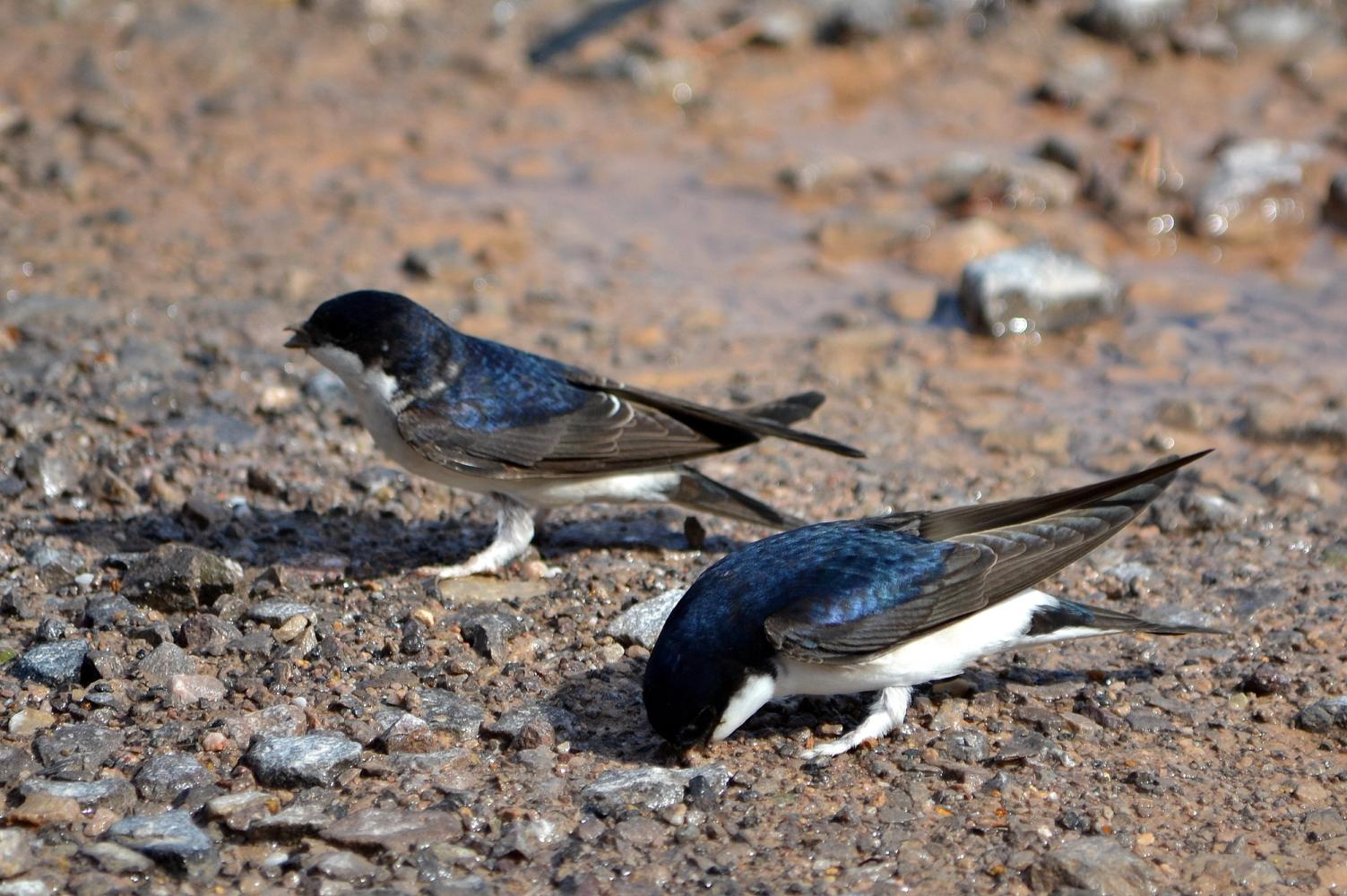
House martins return from Africa in April and May to spend the summer in the UK. They catch flying insects on the wing and build cup-shaped mud nests under the eaves of houses and other buildings.
Deteriorating insect-rich habitats may be making it difficult for them to find food. When the weather is dry, it can be difficult for them to find soft mud to build their nests.
Another issue causing their decline is that their nests stick less easily to modern plastic soffits and may fall off killing their eggs or young.
The population of Sand Martins is fairly stable in the UK, with around 71,000 breeding pairs. However, it is still important to provide robust nesting options for these birds now and for the years to come.
Sand Martins arrive in the UK around March, having travelled up to 3,000 miles from sub-Saharan Africa. They like to nest in sandy cliffs, river banks, and gravel pits, digging burrows up to a metre long.
Our work in Hampshire

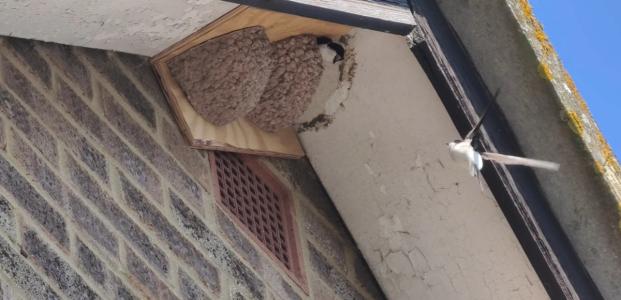
We're working with Hampshire Ornithological Society to provide homes for struggling House Martins.
As part of an initiative to improve outcomes for Swifts, Swallows, and Martins across our supply area, we have funded 100 artificial double nest cups for this project. They have now been fitted to Hampshire properties in our supply area.
We're delighted to hear we've had the first reports of the artificial nest cups being used, and look forward to further sightings. If you see any of the artifical nest cups being used in the Hampshire area, please register them here.(opens in a new tab)
Our work in Sussex

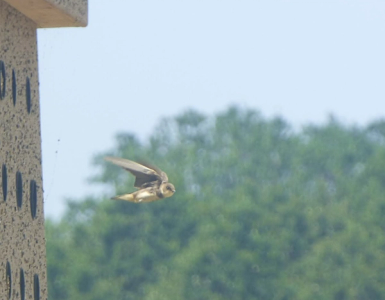
We have continued our work to boost biodiversity by installing artificial nest sites at Arlington and Barcombe reservoirs to help increase the breeding success of House Martins and Sand Martins in Sussex.
Both species are regular visitors to the reservoirs, arriving in spring after a long 3,000 mile migration from sub-Saharan Africa and staying to breed over the spring and summer months.
The house martin towers installed at Arlington and Barcombe have 24 artificial nest cups designed to appeal to these birds who like to breed in loose colonies; there is also room for them to construct natural mud nests.
The Sand Martin banks have been designed to mimic their natural habitat, using long tubes packed with sand, as well as using acoustic lures to encourage them to nest.
Banks such as these are notoriously difficult to establish, with many taking years to welcome their first visitors. We’re thrilled that in their first year we have had eight pairs use them to rear a first brood, and one pair even stayed and reared a second brood.
The success of the bank at Arlington in its first year is wonderful news and, along with the large artificial bank at Arundel Wetlands Trust, is one of just a handful of sites where the species is known to breed across East and West Sussex.