
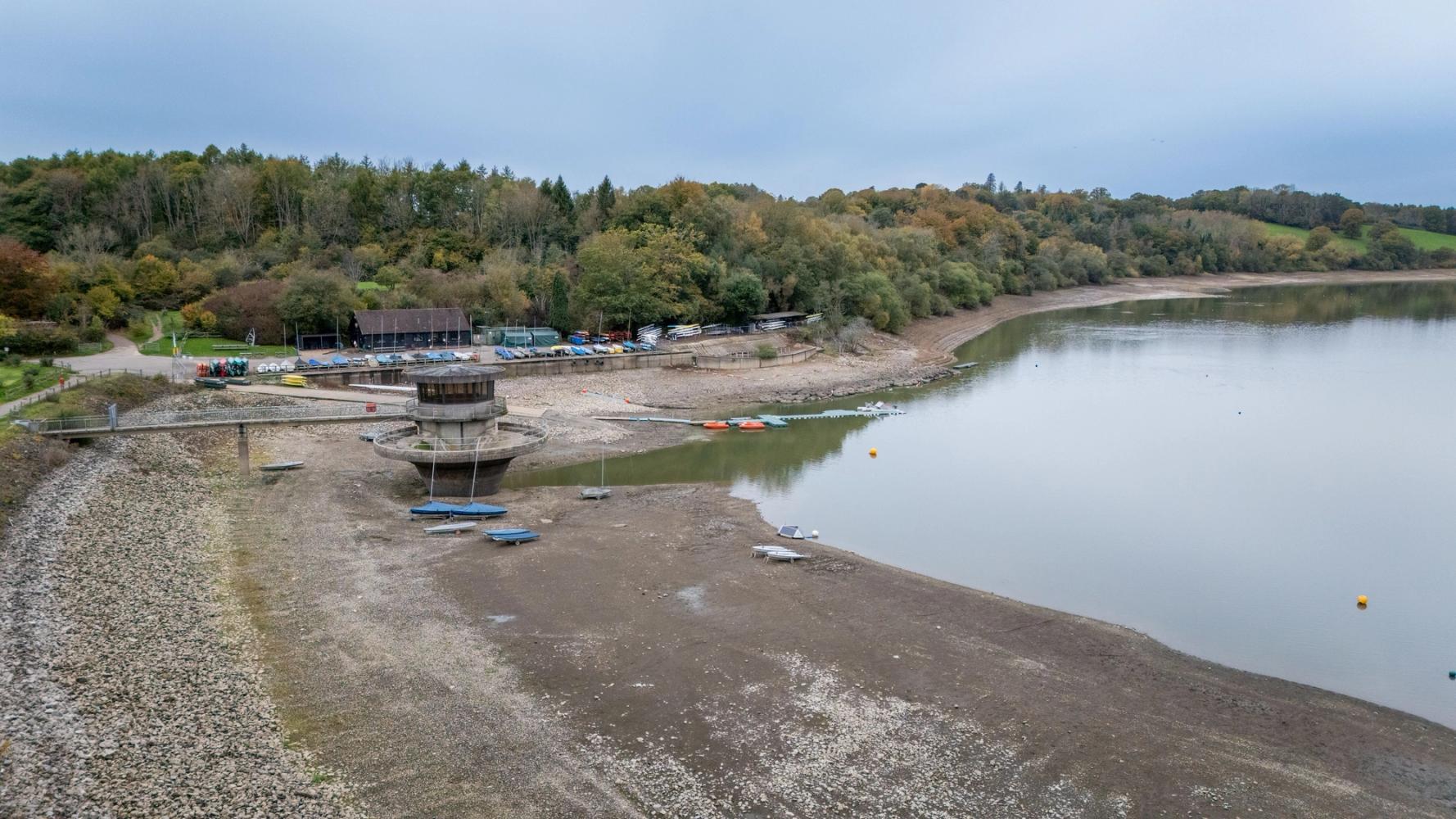
As your drinking water supplier, balancing your daily water needs with the precious natural environment is a delicate act.
Explore our proposed Drought Plan for 2027–2032 on how we plan to take action to protect supplies and the environment during dry weather and drought events.
Water scarcity in the South East
We're proud to deliver 550 million litres of fresh drinking water every single day through 9,000 miles of underground pipes. But the South East is officially classified as "seriously water stressed."
Climate change is making the occurrence of extreme weather events, like severe droughts and intense heatwaves, the new normal. The record-breaking drought of 2025 proved just how quickly our resources can be pushed to the limit, with peak summer demand increasing by up to 30 per cent overnight.
At the same time, we operate in a uniquely rich natural landscape, home to:
- 196 Sites of Special Scientific Interest (SSSI)
- 17 Special Areas of Conservation
- 11 National Nature Reserves
- England’s most densely wooded region of rare ancient woodland
Our job is to keep your taps flowing while allowing this precious environment to thrive.
Building resilience for the next five years
The drought of 2025/26 showed how quickly climate change and the way we use water can strain the water network. During heatwaves, we now routinely see demand for drinking water increase by 20 to 30 per cent, the equivalent of adding a town the size of Maidstone or Eastbourne overnight on to our supply network.
Our core challenge is maintaining a reliable supply to customers while protecting a highly sensitive local ecosystem that includes 196 Sites of Special Scientific Interest (SSSIs) and other precious water dependent habitats including chalk streams.
What we're doing
Over the next five years, we are investing £1.9 billion to maintain supplies and build infrastructure resilience, including fixing leaks faster with smart technology, rolling out smart meters, and developing a new reservoir at Broad Oak near Canterbury.
However, we must also be prepared for extended periods of dry weather placing pressure on our resources and increasing the demand for water. Our new draft Drought Plan outlines a flexible "toolbox" of short-term actions to manage severe shortages, incorporating lessons learned from the 2025 drought. Key updates include:
- Refined trigger framework: Updated water demand triggers that better reflect modern peak summer usage.
- Proactive, localised communication: Initiating targeted, area-specific water-saving campaigns much earlier in the year.
- Enhanced collaboration: Closer coordination with catchment partnerships, wildlife trusts, and local authorities to protect river health.
- Targeted support: Clearer restriction exemptions for vulnerable customers on our Priority Services Register (PSR) and increased rainwater-harvesting support for farmers and landowners.
- Extreme drought options: the addition of new options that would be implemented in a very severe drought situation to avoid the need for emergency measures